
“A teacher is someone who sees each child as a unique person and encourages individual talents and strengths. A teacher looks beyond each child’s face and sees inside their soul” (Barbara Cage)
A child is born into this world. This child is made up of a body, mind and soul. This child is a unique individual who has potential to achieve and become anything he sets his mind to do. In order for this child to achieve, the child’s body, mind and soul need to be nurtured in an environment that is positive and uplifting. It is important for the child to be provided with a loving, secure and stimulating environment so that the child can realize how special he is and the capabilities he has got.
When children participate in art activities it is important for the teacher to consider the whole child.
Socio-Emotional Development
Young children feel a sense of emotional satisfaction when they are involved in art. Whether they are modelling with clay, drawing with crayons, or making a collage from recycled scraps it makes no difference. This satisfaction comes from the control children have over the materials they use and the autonomy they have in the decisions they make. Deciding what they will make and what materials they will use may be the first opportunity children have to make independent choices and decisions.
Art also builds children's self-esteem by giving them opportunities to express what they are thinking and feeling. When children participate in art activities with classmates, the feedback they give to each other builds self-esteem by helping them learn to accept criticism and praise from others. Small group art activities also help children practice important social skills like taking turns, sharing, and negotiating for materials.
Cognitive Development
For very young children, art is a sensory exploration activity. They enjoy the feeling of a crayon moving across paper and seeing a blob of coloured paint grow larger. Exploring materials is very important because it is through exploration that children build knowledge of the objects in the world around them.
Activities involving art also require children to make decisions and conduct self-evaluations. Klein (1991) described four decisions that child artists make. First, they decide what they will portray in their art—a person, a tree, a dragon etc. Second, they choose the media they will use – paint, clay, dough etc. Children decide next how quickly or how slowly they will finish their project, and finally, how they will evaluate their creation. Most often, children evaluate their artwork by thinking about what they like and what other people tell them is pleasing (Feeney & Moravcik, 1987).
As children grow and develop, their art-making activities move beyond exploring with their senses and begin to involve the use of symbols. Children begin to represent real objects, events, and feelings in their artwork. Drawing, in particular, becomes an activity that allows them to symbolize what they know and feel. It is a needed outlet for children whose vocabulary, written or verbal, may be limited (de la Roche, 1996). This early use of symbols in artwork is very important because it provides a foundation for children's later use of words to symbolize objects and actions in formal writing.
Motor Development
While doing art, young children develop control of large and small muscle groups. The large arm movements required for painting or drawing at an easel or on large paper on the floor build coordination and strength. This is known as gross motor development. The smaller movements of fingers, hands, and wrists required to cut with scissors, model clay, or draw or paint on smaller surfaces develop fine motor dexterity and control. With repeated opportunities for practice, young children gain confidence in their use of tools for their art and later for writing.
Art activities also help children develop eye-hand coordination. As children decide how to make parts fit together into a whole, where to place objects, and what details to include, they learn to coordinate what they see with the movements of their hands and fingers. This eye-hand coordination is essential for many activities, including forming letters and spacing words in formal writing.
A lot of thought needs to go into planning an activity. It needs to suit the age of the child. The materials that are provided should create many creative possibilities. An area should be provided where the children are free to create. There should always be enough apparatus to prevent the children from losing interest. The child should be dressed comfortably so he is able to explore freely with all the apparatus. It is recommended that an apron is worn.
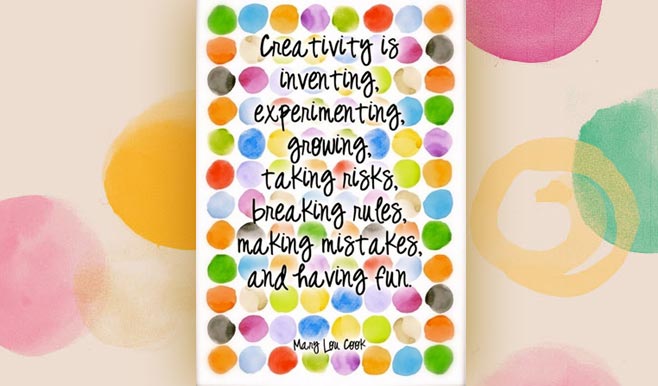
When planning art activities it is very important the children are provided with a stimulating environment . The materials given to the children should allow them freedom to explore. The child needs to be encouraged to think for himself, to do things his own way, to ask questions, to make mistakes and learn from them. Providing the child with the opportunity to express himself develops the child’s imagination, perseverance, self-discipline and self-confidence. The feedback from the teacher plays a vital role in ‘making’ or ‘breaking’ a child. Always give positive feedback and always state what part of the picture is liked. If emphasis is played on positively describing the picture the child will gain a sense that the picture has meaning.
